
Hearing Teasting

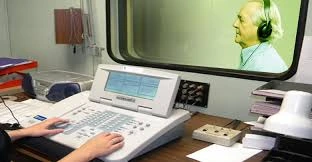
PURE TONE AUDIOMETRY (PTA)

It is a hearing test used to determine the presence or absence of hearing loss. If hearing loss is present, the audiologist will be able to determine both type and degree of hearing loss. Each ear will be tested individually. This information is critical to determine if medical or surgical intervention is possible or if hearing aids may help
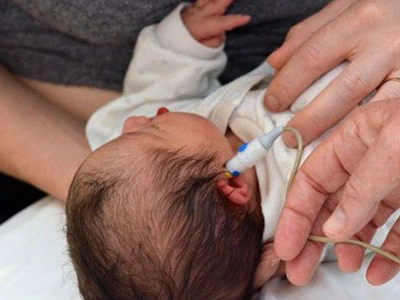
OTO-ACOUSTIC EMISSIONS (OAEs)

OAEs are highly sensitive tests that are used to assess the functioning of the outer hair cells within the cochlea of the inner ear. This test gives an indication of the degree of damage to the cochlea and also helps in fitting of hearing aids. In conjunction with ABRs, OAEs are often used to differentially diagnose auditory neuropathy - a disorder of the auditory nerve where in the patient often complains that,
ABRs and ASSRs

are objective ways of determining the degree and type of hearing loss and also in differential diagnosis of different hearing disorders. They assess the ability of the auditory nerve and beyond to respond faithfully to the sound heard. They are often used in the hearing assessment of new-borns and infants as they do not require the child to respond to the sounds. "He can hear the sound but cannot understand anything that he hears." Another advantage is the fact that these tests can be performed even when the child is asleep. ASSRs can further be used to objectively deduce an audiogram based on the presence or absence of responses at different frequencies.
Tinnitus Evaluation and Management

Many individuals complain of a buzzing or ringing sound being present in their ears. This type of constant being heard by these individuals is called tinnitus. Tinnitus may be perceived as buzzing, ringing, hissing, pulsatile, whistling etc. Each person may have different types of tinnitus and the same person might have different types of tinnitus perception in his own two ears.

New Born and Industrial Hearing Screening

As a part of our extension services, we undertake hearing screening for new-born children in co-ordination with different local hospitals in Delhi. This is done with the motto "early identification promotes early intervention". Early intervention further promotes better speech and language abilities of a child born with hearing impairment.

Impedance audiometry test

Impedance audiometry test to identify hearing problems. An impedance analysis performed by an ENT doctor helps to identify possible problems with the auditory system, and in particular with the eardrum.

New Born and Industrial Hearing Screening

As a part of our extension services, we undertake hearing screening for new-born children in co-ordination with different local hospitals in Delhi. This is done with the motto "early identification promotes early intervention". Early intervention further promotes better speech and language abilities of a child born with hearing impairment.

ASHA Services

Autism / ASD

Autism means a person’s brain works a bit differently.

People with autism may:

  • Think and learn in their own way
  • Find social situations confusing or tiring
  • Like routines and knowing what to expect
  • Be very sensitive to sounds, lights, or textures
  • Have strong interests they care a lot about

Some autistic people:

  • Talk a lot, some talk a little, and some don’t talk at all
  • Need extra help, while others are very independent

Autism is not a disease and not anyone’s fault. It’s something a person is born with and has for life.

Autistic people also often have strengths, like:

  • Great focus
  • Good memory
  • Honesty
  • Creative or unique thinking

ADHD

Attention-Deficit/Hyperactivity Disorder (ADHD) is a neurodevelopmental condition that affects how a person regulates attention, activity level, and impulse control. It typically begins in childhood and can continue into adolescence and adulthood.

Key characteristics

ADHD is commonly associated with one or more of the following patterns:

Inattention

  • Difficulty sustaining attention on tasks or activities
  • Frequently making careless mistakes or overlooking details
  • Trouble organizing tasks, managing time, or following instructions

Hyperactivity

  • Excessive movement or restlessness
  • Difficulty remaining seated when expected
  • Feeling internally restless, even when not visibly active

Impulsivity

  • Acting without considering consequences
  • Interrupting others or speaking out of turn
  • Difficulty waiting for one’s turn

Additional information

  • ADHD is not caused by poor discipline or lack of effort
  • It is linked to differences in brain development and functioning
  • Symptoms may vary in severity and presentation between individuals

Management and support

  • Educational or workplace accommodations
  • Behavioral strategies and skills training
  • Medical treatment when appropriate

ADHD does not reflect intelligence or ability; individuals with ADHD can be highly capable and successful when properly supported.

Childhood Language Disorder

Childhood Language Disorder (also called Developmental Language Disorder, DLD) is a neurodevelopmental condition that affects a child’s ability to understand and/or use spoken language.

Main features

  • Understanding language (receptive language)
  • Trouble following instructions
  • Difficulty understanding questions or complex sentences
  • Using language (expressive language)
  • Limited vocabulary for their age
  • Short or grammatically incorrect sentences
  • Difficulty explaining ideas, stories, or experiences
  • Difficulty participating in conversations
  • Challenges with reading, writing, and learning at school
  • Problems finding the right words or forming clear sentences

Important points

  • The condition begins in early childhood
  • It can continue into adolescence and adulthood
  • It is not caused by poor parenting or lack of effort

Support and management

  • Speech and language therapy
  • Classroom accommodations
  • Supportive communication environments

Stuttering / Stammering

Stuttering (also called Stammering) is a speech fluency disorder that affects the smooth flow of speech. It usually begins in early childhood and can continue into adolescence or adulthood.

Stuttering may involve:

  • Repetition of sounds, syllables, or words (e.g., “b-b-ball”)
  • Prolongation of sounds (stretching a sound)
  • Pauses or blocks where speech temporarily stops
  • Physical tension or effort while speaking

Stuttering is not caused by nervousness, low intelligence, or poor parenting.

A person who stutters usually knows what they want to say but has difficulty saying it smoothly

Severity can vary depending on the situation and over time

Impact:

Stuttering can affect:

  • Confidence in speaking situations
  • Participation in class or conversations
  • Social interactions

Support may include:

  • Speech and language therapy
  • Learning strategies to improve fluency and confidence
  • Patient, supportive communication from others

Hearing Impairment

Hearing Impairment is a condition in which a person has partial or complete difficulty hearing sounds in one or both ears. It can be present at birth or develop later, and it may affect speech, language development, and communication. Support may include hearing devices, communication strategies, and educational accommodations.

Speech Delay

Speech Delay is when a child develops speech skills more slowly than expected for their age. The child may understand language well but have difficulty producing sounds, words, or sentences. With early support, such as speech therapy, many children make good progress.

Behaviour Issues

Behaviour issues refer to ongoing difficulties in how a child acts or responds in different situations. This may include problems with following rules, managing emotions, paying attention, or interacting with others. Behaviour issues can have many causes and often improve with understanding, guidance, and appropriate support.

Speech and Language Therapy

Speech and Language Therapy is a type of support that helps people improve communication skills, such as speaking, understanding language, voice, fluency, and social communication. It is provided by trained professionals and is tailored to the individual’s needs.

Sensory Integration Therapy / ABA Therapy

Sensory Integration Therapy helps children who have difficulty processing sensory information (like sights, sounds, touch, or movement). It uses activities to help them respond to sensory input more comfortably and improve daily functioning.

ABA Therapy (Applied Behavior Analysis) is a type of therapy often used for autistic children. It uses structured teaching and positive reinforcement to help develop skills, improve behavior, and support learning and independence.

Voice Therapy

Voice Therapy is a type of therapy that helps people improve the quality, pitch, volume, or clarity of their voice. It is often used for people with voice problems due to strain, injury, or medical conditions and is guided by a trained speech-language therapist.

Fluency Therapy

Fluency Therapy is a type of speech therapy that helps people speak smoothly and without interruptions, such as stuttering or stammering. It teaches techniques to improve speech flow, confidence, and communication skills.

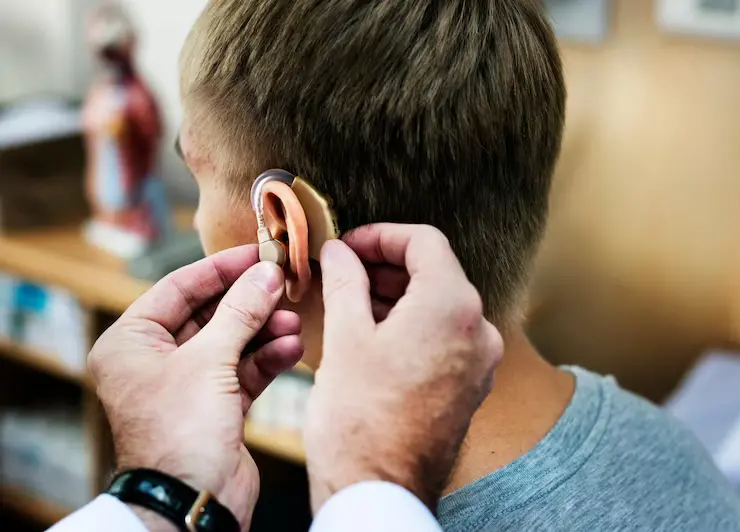
Hearing Aid Fitting

Hearing Aid Fitting is the process of selecting, adjusting, and customizing a hearing device to help a person hear better. A hearing professional ensures the device matches the person’s hearing needs and comfort for daily use.

Hearing Aid Trial

Hearing Aid Trial is a testing period where a person tries a hearing aid to see how well it improves hearing and comfort before deciding to use it long-term. It helps find the best device and settings for the individual.

Digital Hearing Aids (BTE / RIC / CIC / IIC)

Digital Hearing Aids are modern devices that amplify sound and improve hearing using digital technology. They come in different styles:

  • BTE (Behind-the-Ear): Sits behind the ear with a tube to the ear canal; suitable for most hearing losses.
  • RIC (Receiver-in-Canal): Small device behind the ear with the speaker in the ear canal; discreet and comfortable.
  • CIC (Completely-in-Canal): Fits entirely inside the ear canal; very small and less visible.
  • IIC (Invisible-in-Canal): Fits deep inside the ear canal; nearly invisible and very discreet.

Speech Therapy

Speech therapy is a treatment of speech disorders or communication problems. A speech therapist or speech-language pathologist performs speech therapy. Speech therapy includes techniques to improve communication. This includes language intervention activities, articulation therapy, and other methods depending on the language disorder.

Speech therapy specialist in Gaya has one of the best speech therapists who specialize in diagnosing, evaluating, and treating communication disorders, swallowing disorders, voice disorders, and cognitive-communication disorder. A speech-language pathologist plays a crucial role in the treatment of autism spectrum disorder.

Speech-language pathologists are known as a speech therapist. Speech therapists are educated to identify the problem and disorder and find the best way to treat it. The speech therapists study human communication, development in human communication, and its disorders.

  • A speech therapist must have the required qualification/degree.
  • The SPL should have a license/ certification in this field.

Speech therapy specialist in Gaya works one-and-one with every child to help them to overcome their problems. Children or adults with Dyslexia, hearing impairments, cleft lip, autism, motor planning problems, traumatic brain injury, etc. can seek help from speech therapy in Gaya.

It is better if the therapy starts as early as possible. Children below 5 learn better than those who begin later. This doesn’t mean that children who start therapy later in life don’t show effective results. They learn a little slower as they have learned patterns that need to be changed during therapy.

t is better to start therapy as early as possible. Babies with development delays begin to show signs as early as three months. Three months is way too soon to consult a therapist. It is advisable to monitor signs, and if anything of concern comes around, you can consult the pediatrician.

By the age of 12 months, babies start to react when being spoken to. If your child doesn’t react, then this is the time you should consult the speech therapist in Indirapuram. By this time, your child should respond to hand gestures like waving, pointing, or nodding. By the age of 2 years, the child should have spoken the first word. If your child isn’t vocalizing or relies on gestures to communicate with you, you should consult a speech therapist in Indirapuram instead of waiting for more.

When your child is enrolled in a speech therapy assessment, they learn how to overcome the speech impairments. Speech therapy in Delhi works with your child to make your child feel comfortable and safe. One-on-one interaction, working in small groups, and directly engaging them in activities in a classroom helps your child overcome specific speech difficulties. Speech therapist in Indirapuram utilizes a variety of activities, which are strategies to treat every child individually.

  • Articulation therapy- Articulation therapy includes exercises that help your child to learn sounds and syllables. All the exercises are age-specific and are related to your child’s therapy needs. The speech therapist shows how to pronounce certain words like ‘r’ or ‘t.’ They show the children how to move the tongue to pronounce a particular word or specific sound.
  • Language activities- Language activities involve talking or playing using objects, books, or any ongoing event to stimulate a child’s language development. The therapist uses repetition exercises to build language and speech skills.
  • Swallowing and feeding therapy- If the challenge is chewing and swallowing, then your speech therapist will provide some exercises that include various lip, tongue, and jaw exercises. It helps to strengthen the muscles of the mouth. The SPL also teaches the child to work with different temperatures and food textures to increase the child’s awareness during eating and swallowing.
  • Speech, Language and Learning
  • Apraxia
  • Autism
  • Dyslexia and Reading Disorders
  • Auditory Processing Disorders
  • Stuttering
  • Feeding and Swallowing Disorders
  • Misarticulation
  • Voice Problem
  • Stammering / Stuttering

Speech therapy has numerous benefits. Here are some of the benefits of speech therapy in Gaya.

  • Improving communication with articulation therapy between brain and body.
  • Enhancing the learning of language in children through stimulating language communication. It helps the child to learn the use of language through positive reinforcement.
  • Increase in the ability for problem-solving.
  • Improve vocal quality.
  • Enhancing self-esteem in the child.
  • Increased independence.
  • Speech fluency.
  • Speech Assessment and Speech Language Therapy
  • Occupational Therapy
  • Special Education
  • Speech fluency
Scroll to Top